Ancient domed tomb near Pomorie
An ancient monument from the 2nd–3rd century near Pomorie, known as the Hollow Mound — a domed tomb unique to the Balkans, with a circular chamber, a hollow central column and a long dromos.
The ancient domed tomb is located about a kilometre from Pomorie. Among the local population it is also known as the Hollow Mound.
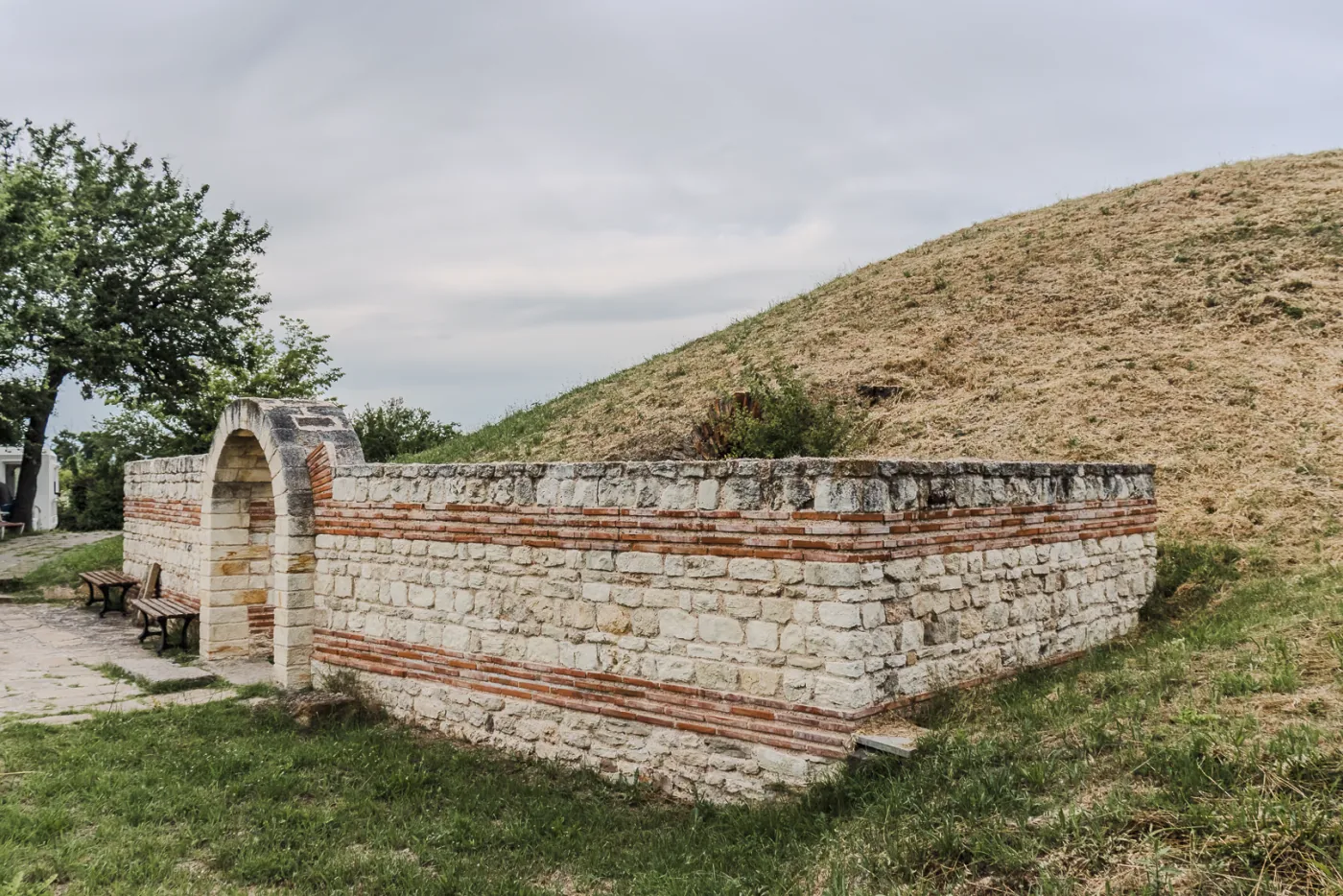
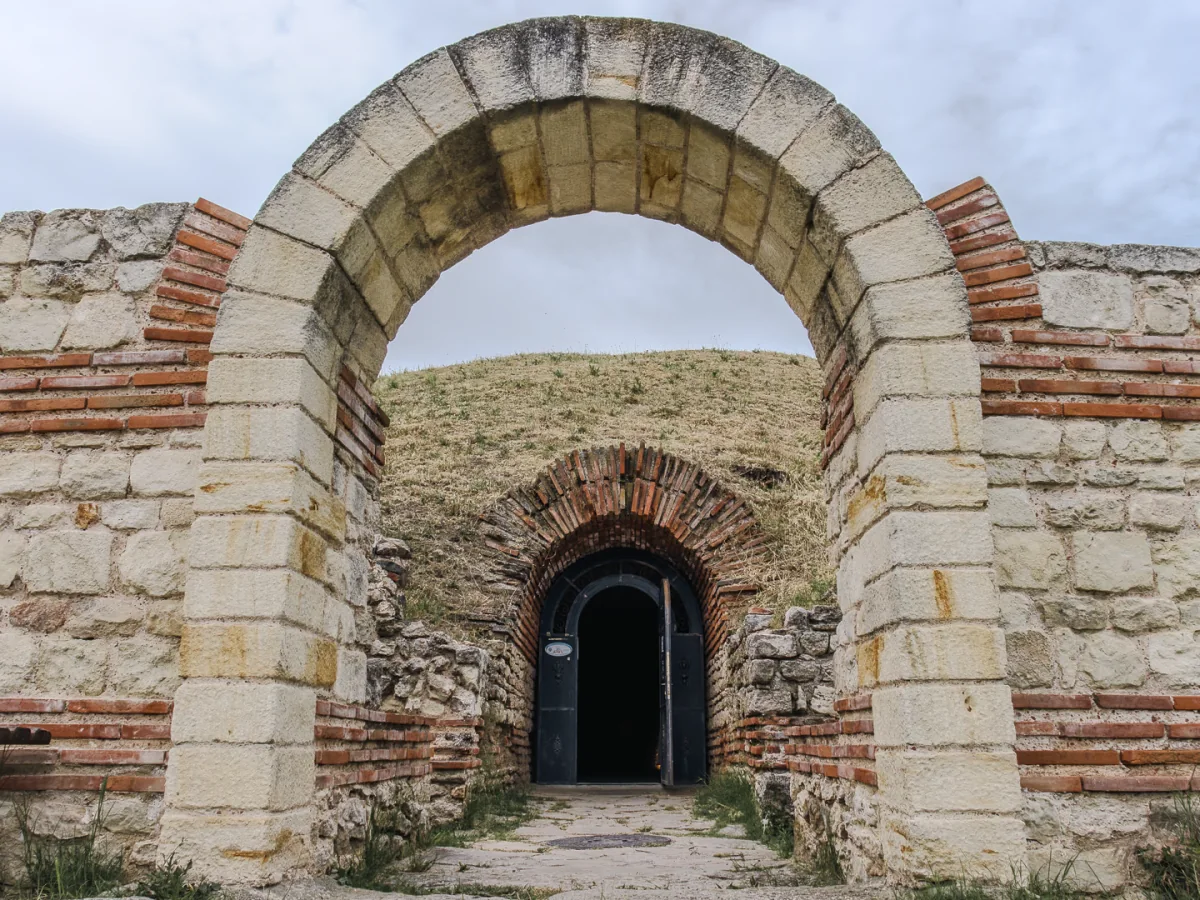
The tomb dates from the 2nd–3rd century, and its architecture is unique to the Balkan Peninsula — one of a kind. It represents a combination of a typical Thracian domed tomb and a Roman mausoleum (heroon), built beneath the embankment of a burial mound.
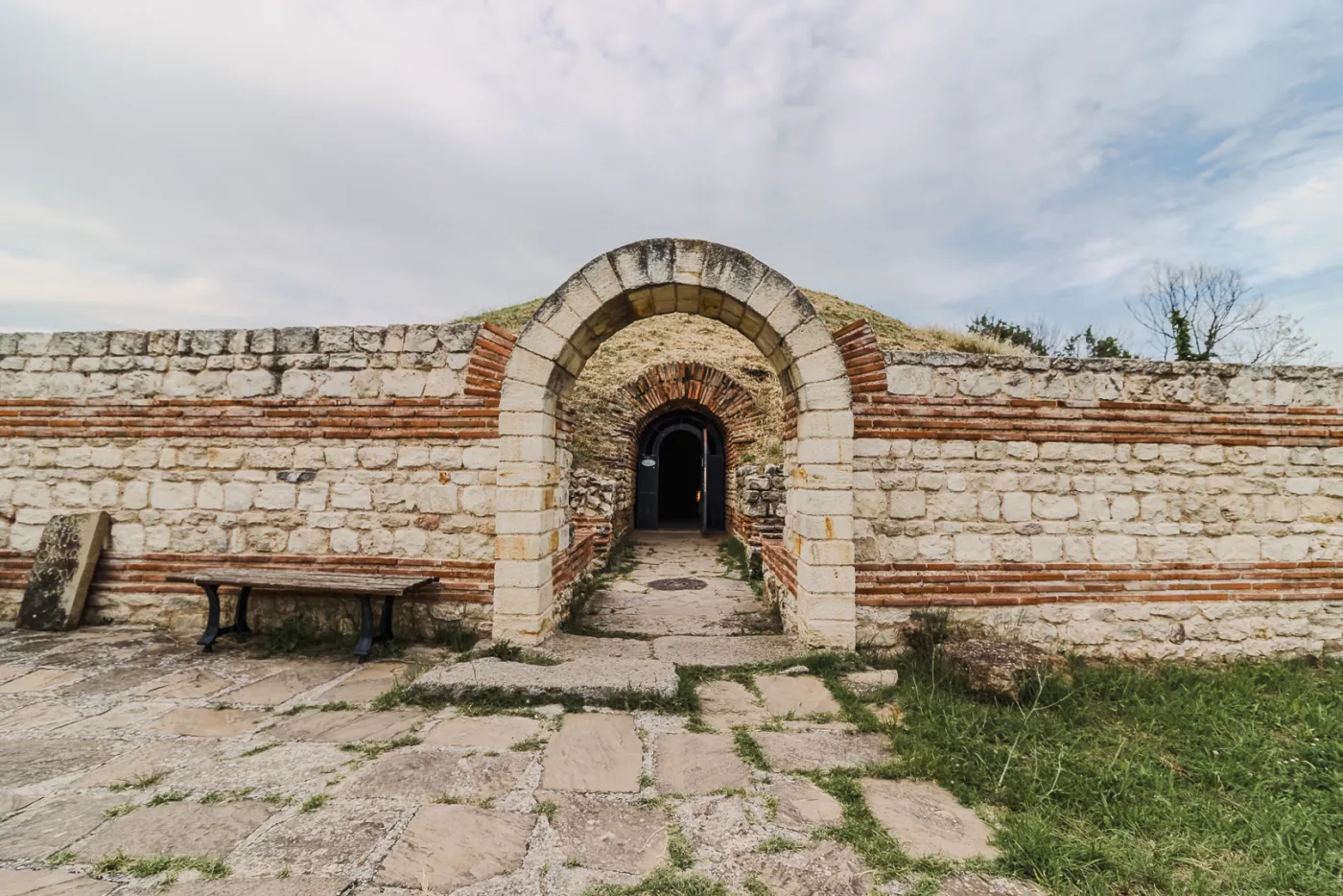
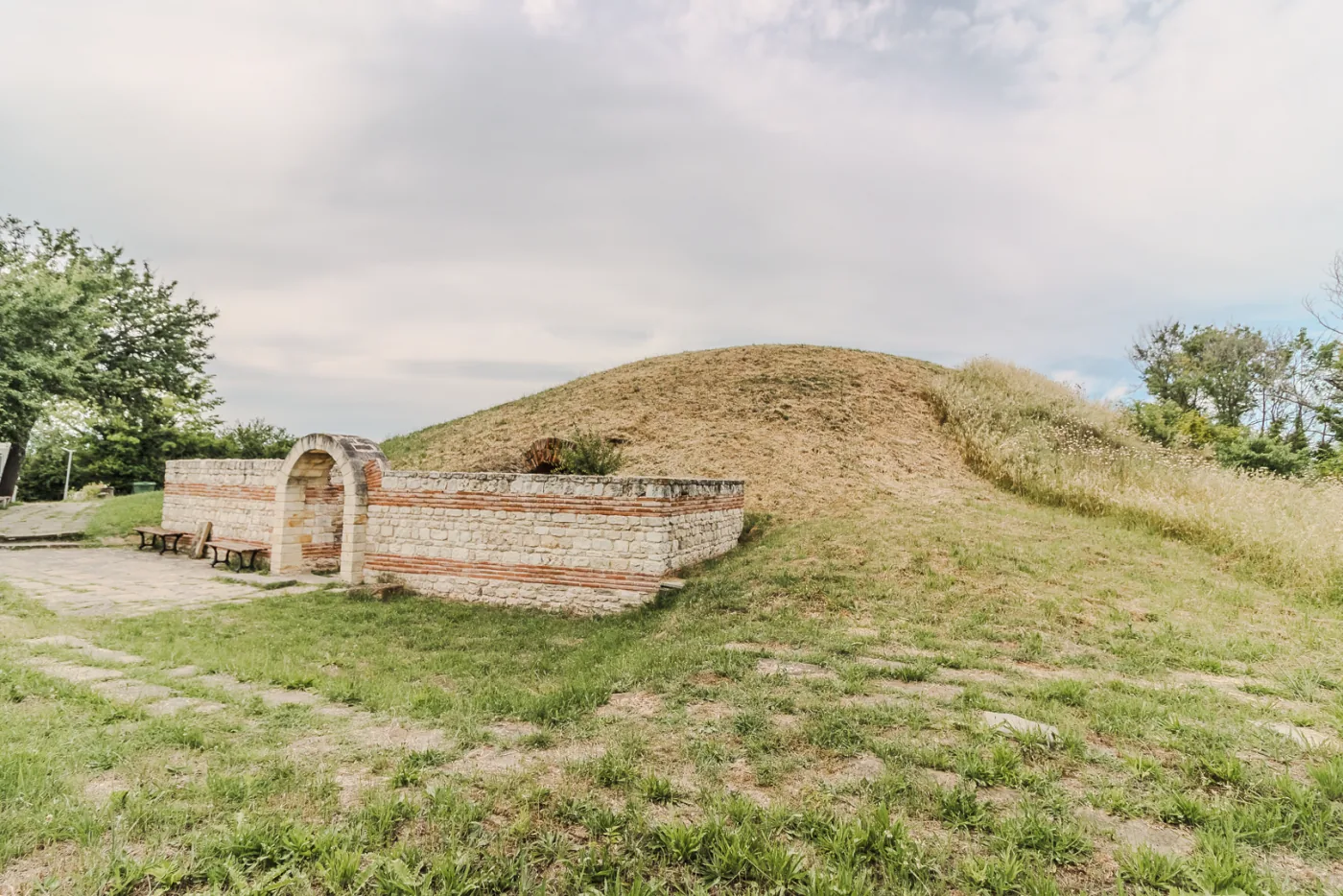
The mound itself is 8 metres high and about 60 metres in diameter; its base is elliptical, while the top has a slightly egg-shaped form. The tomb has been declared a monument of culture of national importance.
Layout
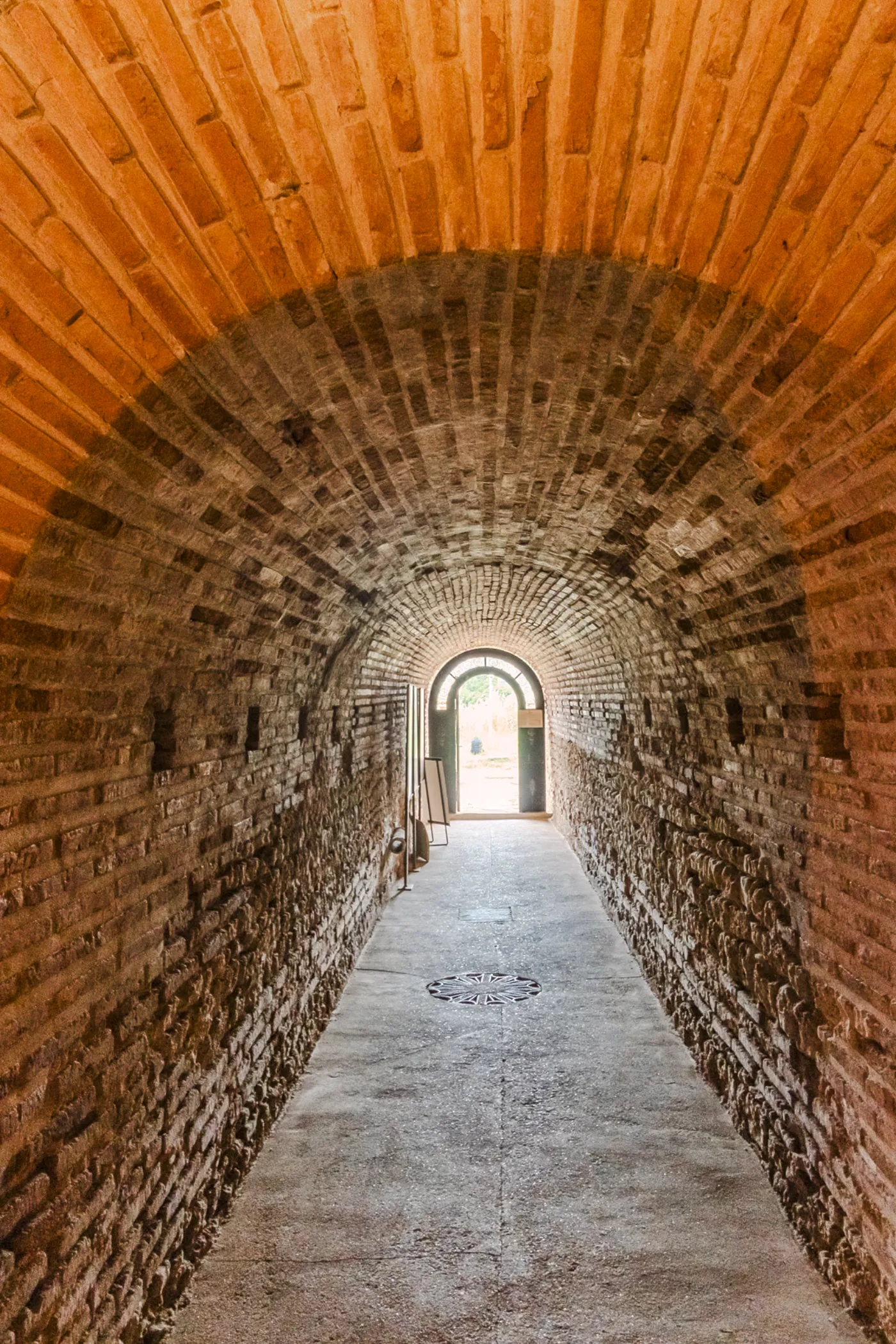
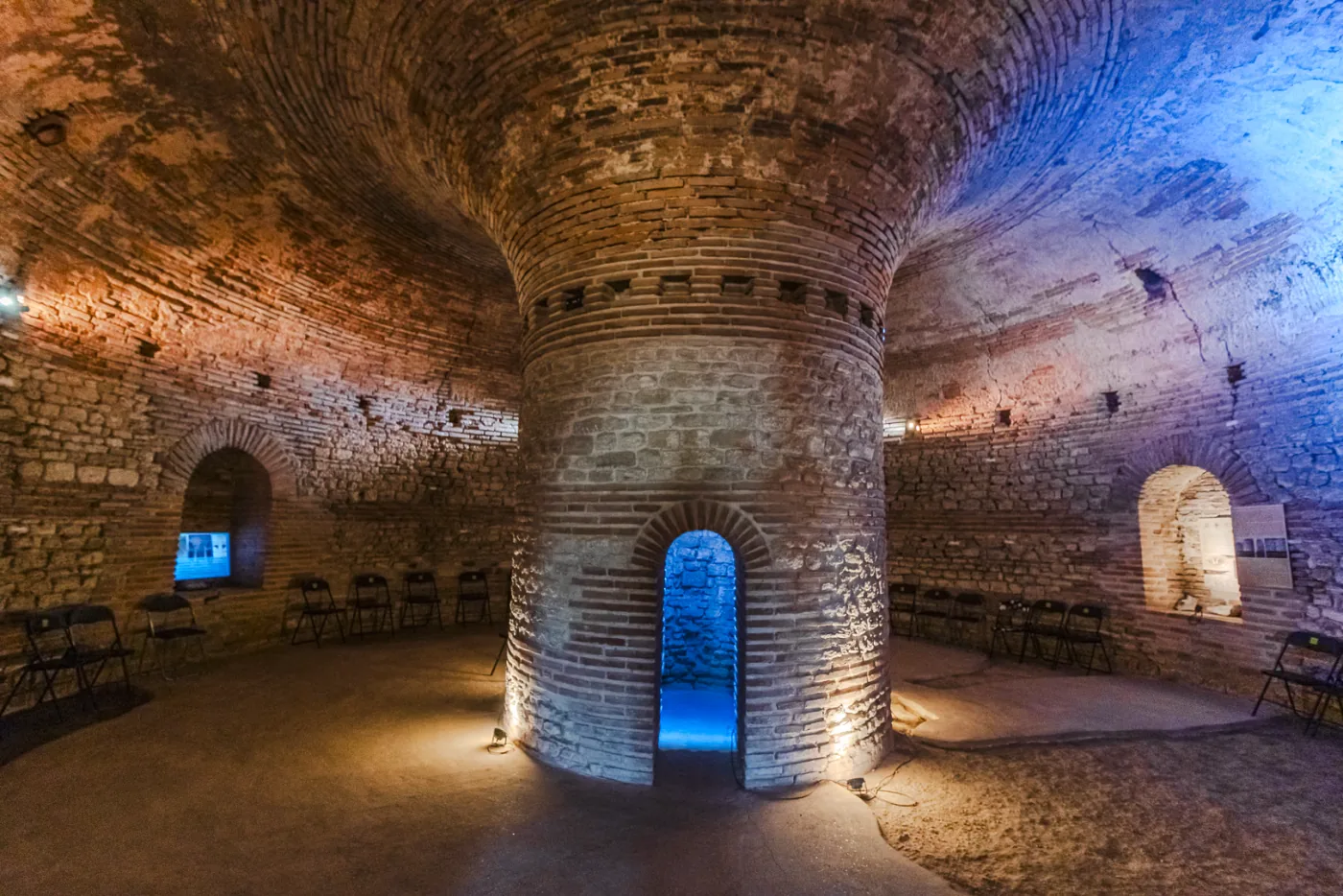
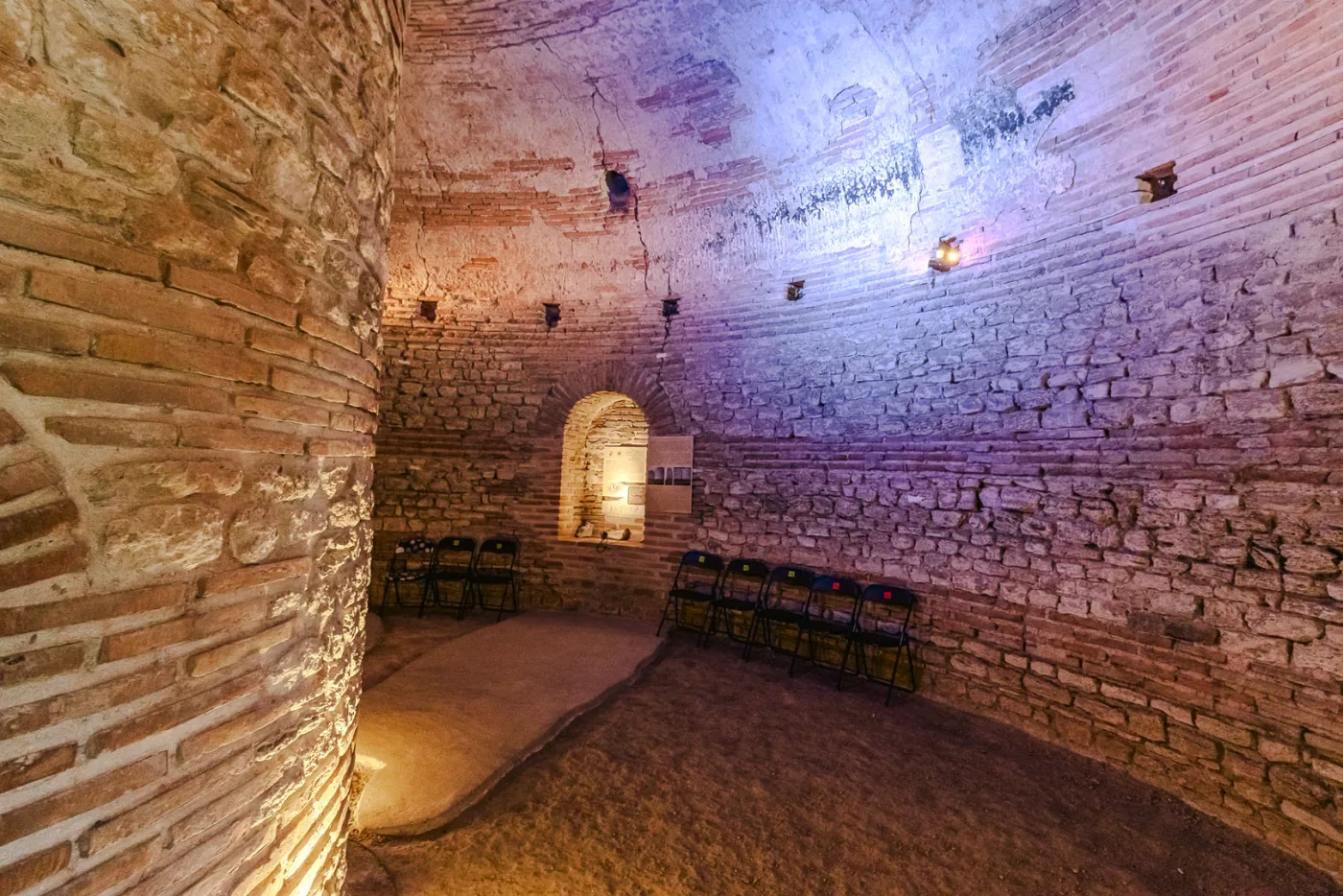
The tomb consists of two main elements — a long corridor (dromos) and a circular chamber. The corridor is 22 metres long, while the chamber is 11.60 metres in diameter and 5.50 metres high. The structure is built of stone, typical of Thracian builders, and of bricks, characteristic of the Romans.
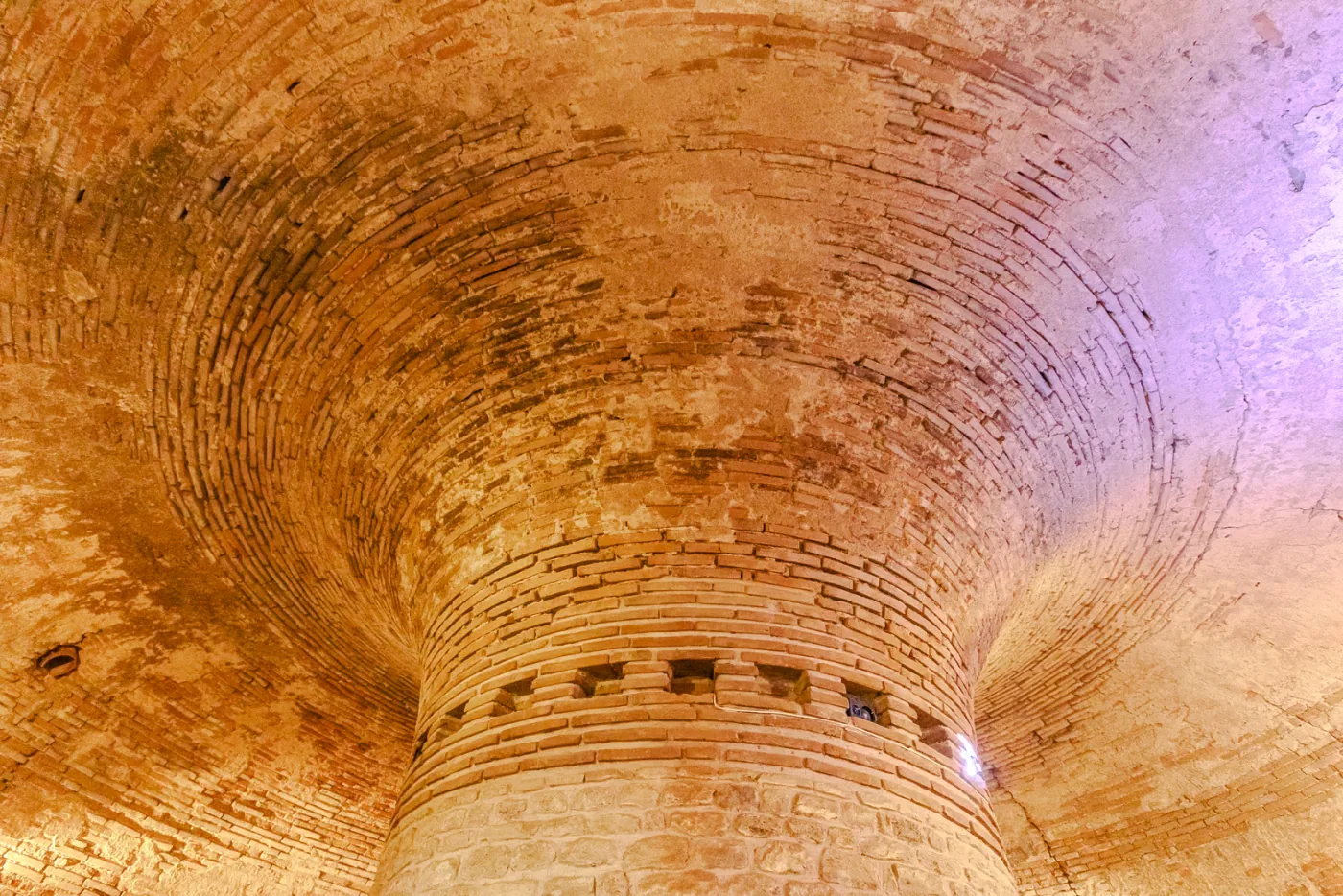
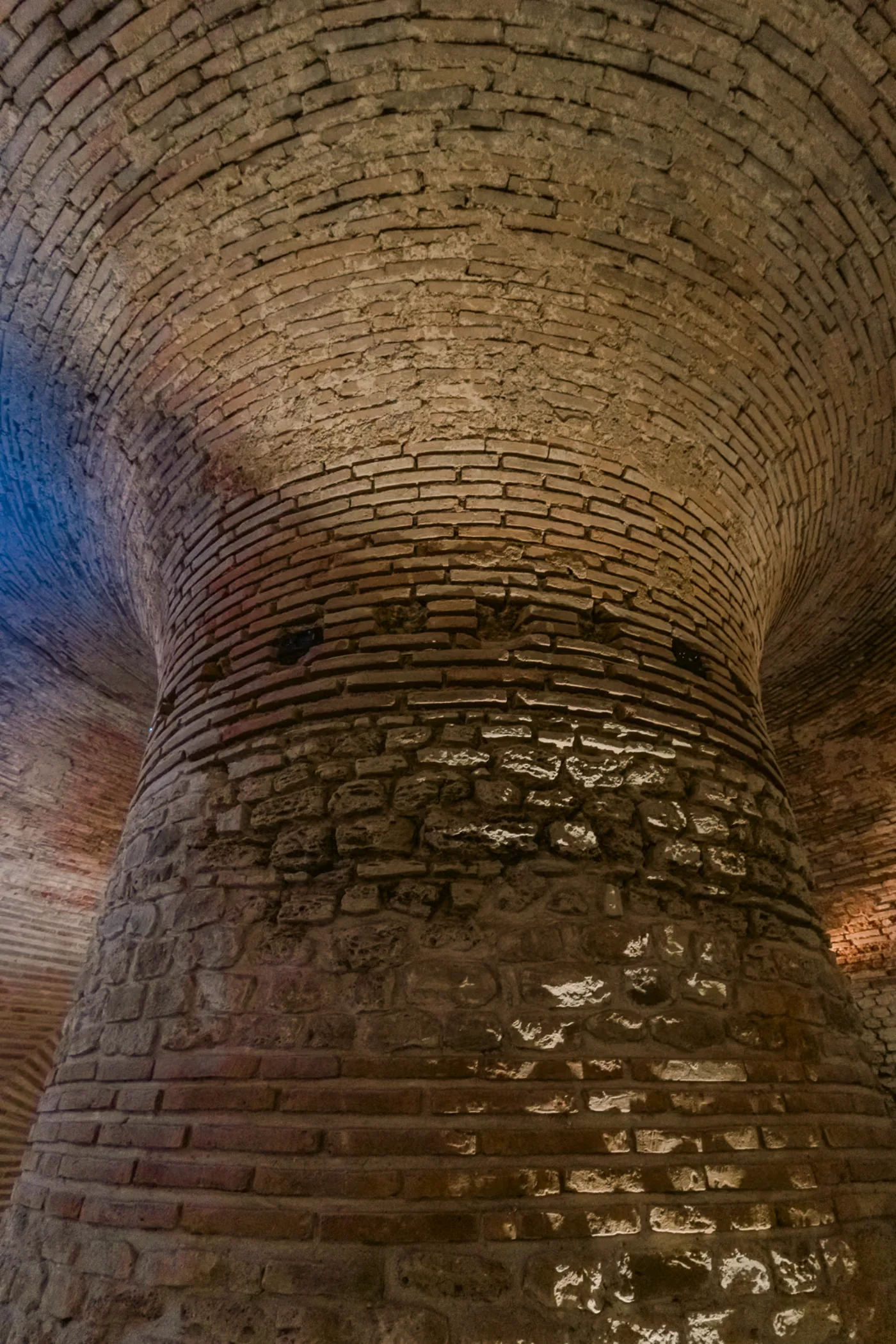
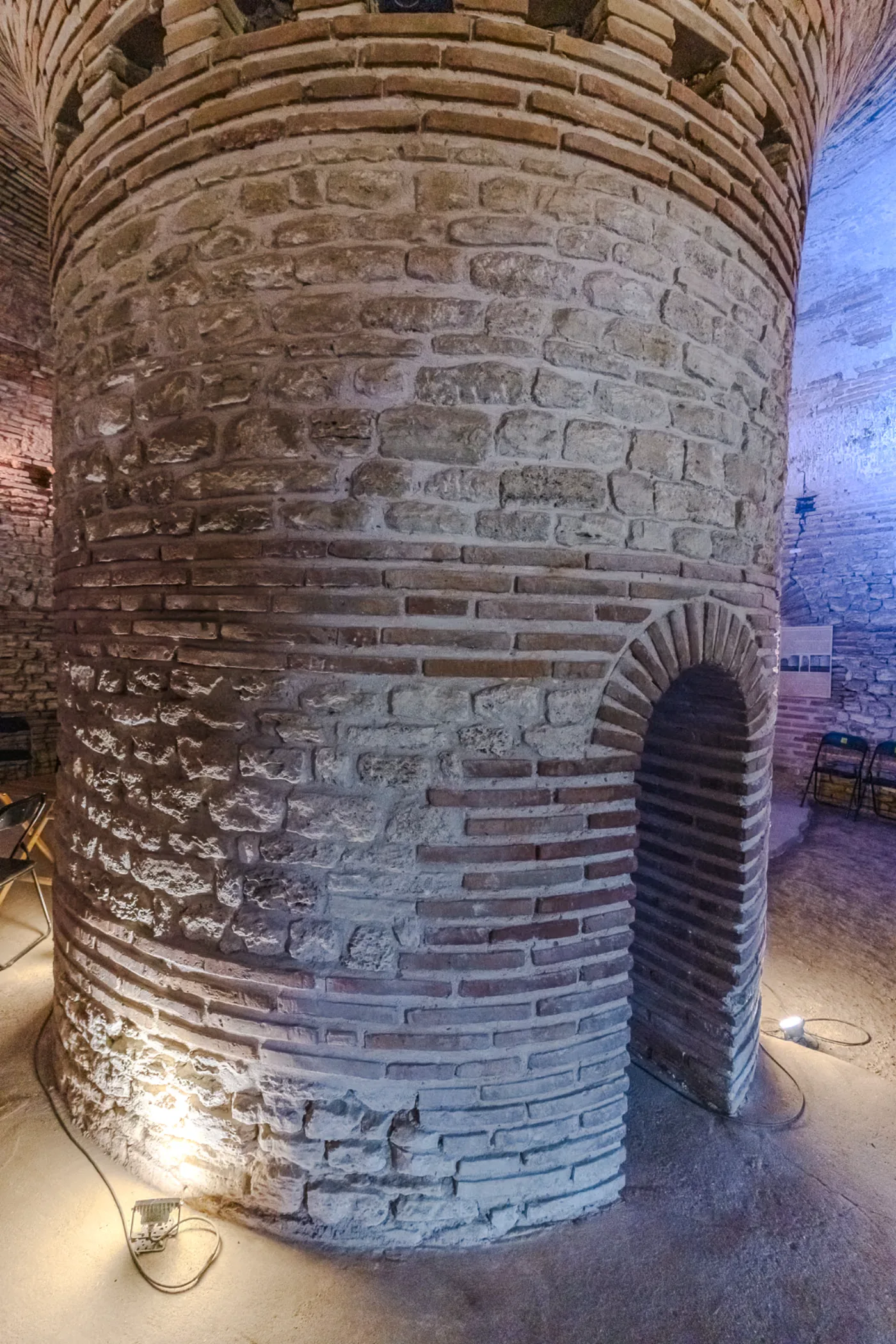
The chamber is covered with a semi-cylindrical vault. At its centre rises a hollow column 3.30 metres in diameter, which widens upwards and merges with the outer wall. On its inner side a spiral stone staircase was once built, leading up to the surface of the mound embankment. Along the circular wall of the chamber there are five niches, in which, according to assumptions, the urns of the deceased were placed.
Architecture and purpose
The chamber forms a semi-cylindrical ring with a central hollow column supporting the vault, which widens upwards like a mushroom and merges with the circular wall of the hall. It is precisely this architectural solution that makes this ancient monument unique.
Religious rituals connected with the cult of the sun were performed in it. There is also a hypothesis that it was used as a crematorium.