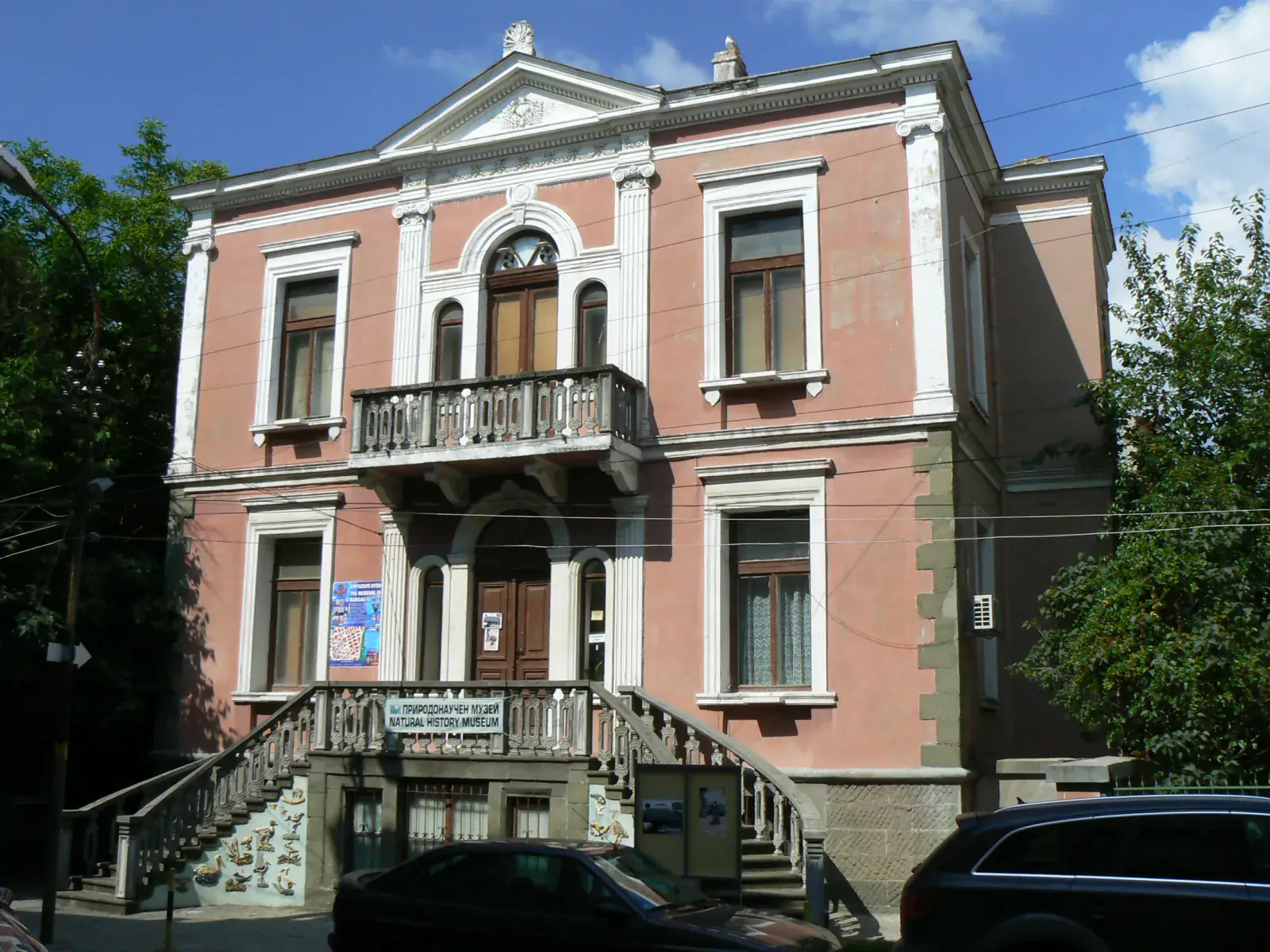
Natural History Museum of Burgas
The rich world of Black Sea flora and fauna.
- Address
- 30 Konstantin Fotinov Street, Burgas
- Phone
- 056 843 239
The Natural History Museum in Burgas, an important part of the Regional History Museum — Burgas, is the only institution of its kind in the whole of South-Eastern Bulgaria. Located at 30 Konstantin Fotinov Street in the central part of the city, the museum is an exceptionally attractive tourist destination — especially for families with children, students and passionate nature lovers. Its permanent exhibition offers a detailed, educational and engaging view of the region's ecological wealth, covering the flora, fauna and geological past of the Burgas region, the Black Sea coast and the Strandzha mountain.
Geological past and palaeontology
Visitors' tour traditionally begins with the impressive geological collection, often presented under the motto "The Magical World of Stone." On display is a rich variety of minerals, crystals, ore and non-ore fossils. Priceless palaeontological finds and fossils bear witness to the prehistoric animal and plant species that inhabited these lands in past ages, providing key information about the evolution of the local nature.
Flora and fauna of Strandzha and the Black Sea
The botanical exhibition gives special focus to the unique vegetation of Strandzha Nature Park, which has preserved rare Tertiary relicts such as the famous Strandzha laurel. The zoological halls present an impressive variety of insects, amphibians, reptiles and mammals. Well-deserved attention is also paid to ichthyofauna, with an emphasis on the characteristic fish species inhabiting the waters of the Black Sea and the coastal lakes.
Ornithological wealth of Via Pontica
Indisputably the most significant and attractive part of the museum's collection is dedicated to birds. Since Burgas is a key stop on Europe's second-largest migratory route — Via Pontica — the exhibition focuses on the feathered inhabitants of the Burgas wetlands (Atanasovsko, Vaya and Mandra lakes). Through masterfully crafted dioramas, rare and globally threatened species are presented in their natural environment.
The Natural History Museum not only preserves the natural memory, but also pursues active eco-educational work.
On the map
How to get here by bus
The nearest public transport stops and the lines that call at them.